Teulu Jones Case Studies
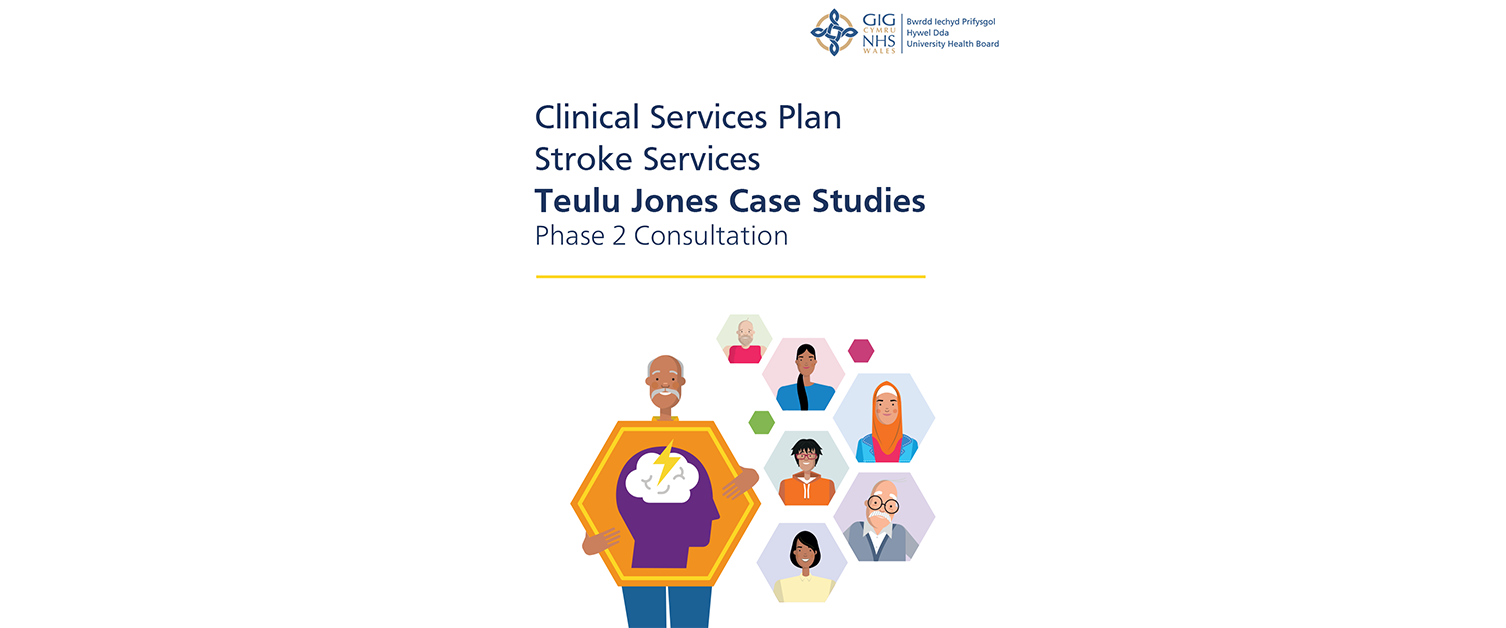
We have a family - Teulu Jones and friends - who help us test and show how different health services could affect someone like you or your loved ones. They aren’t a real family, but they have been designed to be typical of the patients we care for in the Hywel Dda area and surrounding communities.
For our consultation, we have moved the location of some family members and friends, so we can show examples of impacts on people across our area and in the neighbouring communities of Powys and Gwynedd.
Please note that patient experience case studies for Powys and Gwynedd apply only to people who may live outside our Hywel Dda area. These patients are either brought to Bronglais Hospital by ambulance, or by a family member. If you receive your initial stroke care from a neighbouring health board, the location for your ongoing care and treatment may be different. To find out how your care pathway might vary depending on where you first receive treatment, please contact your local health board, - Powys Teaching Health Board or Betsi Cadwaladr University Health Board.
Since the publication of the Clinical Services Plan Consultation document in May 2025, some clinical pathways have developed. The current pathway described below in our Teulu Jones case studies differs to what was in the previous consultation document.
Here you can read what care for stroke patients looks like currently, based on your nearest Hywel Dda main hospital site:
- Bronglais Hospital
- Glangwili Hospital
- Prince Philip Hospital
- Withybush Hospital
Aziz is 68 years old and he works in the family restaurant and enjoys looking after his grandchildren. His wife notices he is not himself one afternoon, one side of his face has dropped, and his speech is slurred. She is worried he might have had a stroke and calls 999. Aziz lives in Aberystwyth.
Currently…
An ambulance takes Aziz to Bronglais, and he is taken directly to the CT scanner, rather than to the Emergency Department. If a stroke is confirmed, thrombolysis treatment would be started while in the scanning department. Aziz would then be transferred to the Stroke Unit in Bronglais Hospital for ongoing care.
He has further tests and assessments by the stroke team, but not always a stroke doctor (out of hours it would be the on-call medical team), and he would have therapy support.
Depending on the severity of the stroke, he may need to stay in hospital for some time or could be supported with early discharge home by a community team.
If Aziz hasn’t had a stroke he will go to the Emergency Department at Bronglais Hospital for further tests.
If Aziz had a more serious stroke (with a large blood vessel occlusion, which is a type of stroke where blood flow to a main artery in the brain is interrupted), he would be taken by ambulance from Bronglais Hospital to a thrombectomy centre in Bristol or Cardiff. Thrombectomy can be used to treat these types of stroke. This care is provided regionally for Wales and south and western regions of England in Bristol and Cardiff.
Once the Bristol or Cardiff thrombectomy team assess Aziz as fit to be discharged from their care, he will be transferred back to Bronglais or directly home, dependent on his recovery post-thrombectomy.
If thrombectomy is not the right treatment for Aziz, then he will be transferred to the Stroke Unit at Bronglais Hospital for his acute stroke treatment.
Aziz may be able to be discharged home with support from the Community Integrated Stroke Team.
Sonia is 37 years old, married with two sons, and manages her own part-time business. Sonia lives in Pembroke Dock. She is always on the go and busy. Sonia has high blood pressure.
While visiting a friend, Sonia complains of a blinding headache, begins to have issues with her vision and speech problems. Her friend calls an ambulance as she is worried Sonia has suffered a stroke.
Currently…
An ambulance takes Sonia to Withybush Hospital, and she is taken directly to the Emergency Department for assessment, before being transferred for a CT scan. Following the scan, Sonia would then be transferred to the Stroke Unit within Withybush Hospital for ongoing care, which may include thrombolysis treatment.
Sonia has further tests and assessments by the stroke team, but not always a stroke doctor (out of hours this would be provided by the on-call medical team), and she would have therapy support.
Depending on the severity of the stroke, Sonia may need to stay in hospital for some time or could be supported with early discharge home by a stroke specific community team.
If Sonia hasn’t had a stroke she will go back to the Emergency Department at Withybush Hospital for further tests.
If Sonia had a more serious stroke, (with a large blood vessel occlusion, which is a type of stroke where blood flow to a main artery in the brain is interrupted), she will be taken by ambulance from Withybush Hospital directly to the thrombectomy centre in Bristol or Cardiff. Thrombectomy can be used to treat these types of stroke. This care is provided regionally for Wales and south and western regions of England in Bristol and Cardiff.
Once the Bristol or Cardiff thrombectomy team assess Sonia is fit to be discharged from their care, she will be transferred to Withybush Hospital or directly home dependent on her recovery post thrombectomy.
If thrombectomy is not the right treatment for Sonia, then she will be transferred to the Stroke Unit at Withybush Hospital for her acute stroke treatment.
Sonia may be able to be discharged home with support from the Community Integrated Stroke Team.
Rhys is 52 years old and a long-distance lorry driver. He is overweight and whilst his diet is improved at home, he often resorts to fast food when on the road. Rhys lives in Newcastle Emlyn, in Carmarthenshire, close to the Ceredigion border.
He becomes ill with a terrible headache and feels dizzy. His speech is slurred and his wife suspects a stroke and calls 999 immediately.
Currently…
An ambulance takes Rhys to Glangwili Hospital, and he is taken directly to the Emergency Department for an assessment, before being transferred for a CT scan. Following the scan, Rhys would then return to the Emergency Department. If a stroke is confirmed thrombolysis treatment will be administered at the Emergency Department, before Rhys is transferred to the Stroke Unit in Glangwili Hospital for ongoing care.
He has further tests and assessments by the stroke team, but not always a stroke doctor (out of hours it would be the on-call medical team), and he would have therapy support.
If Rhys hasn’t had a stroke he will go to Emergency Department at Glangwili Hospital for further tests.
If Rhys had a more serious stroke (with a large blood vessel occlusion, which is a type of stroke where blood flow to a main artery in the brain is interrupted), he would be taken by ambulance to the thrombectomy centre in Bristol or Cardiff. Thrombectomy can be used to treat these types of stroke. This care is provided regionally for Wales and south and western regions of England in Bristol and Cardiff.
Once the Bristol or Cardiff thrombectomy team assess Rhys is fit to be discharged from their care he will be transferred back to Glangwili Hospital or directly home dependent on his recovery post thrombectomy.
If thrombectomy is not the right treatment for Rhys, then he will be transferred to the Stroke Unit at Glangwili Hospital for his acute stroke treatment.
Rhys may be able to be discharged home with support from the Community Integrated Stroke Team.
Alun is a retired electrician. His passion is rugby and at 80 years old he enjoys a daily walk and the crossword. He has a history of heart disease and had a heart attack when he was 70. Alun lives in Llanelli.
His daughter arrives for a visit and Alun has a numb arm, slurred speech and difficulty in understanding what she is saying to him. Alun’s daughter calls 999.
Currently…
An ambulance takes Alun to Prince Philip Hospital, and he is taken directly to the Acute Medical Assessment Unit for assessment, before being transferred for a CT scan. If patients self-present at the Minor Injuries Unit (MIU) in Prince Philip, the staff activate the stroke call and will follow the same process as a patient arriving by ambulance.
Following the CT scan, Alun would then return to the Acute Medical Assessment Unit before transfer to the Stroke Unit in Prince Philip Hospital for ongoing care. This may include thrombolysis treatment.
Alun has further tests and assessments by the stroke team, but not always a stroke doctor (out of hours it would be the on-call medical team), and he would have therapy support.
Depending on the severity of the stroke, Alun may need to stay in hospital for some time or could be supported with early discharge home, by a stroke specific community team.
If Alun hasn’t had a stroke, he will go to the Acute Medical Assessment Unit at Prince Philip Hospital for further tests.
If Alun had a more serious stroke (with a large blood vessel occlusion, which is a type of stroke where blood flow to a main artery in the brain is interrupted) he would be taken by ambulance to the thrombectomy centre at Bristol or Cardiff. Thrombectomy is a treatment that can be used to treat these types of stroke. This care is provided regionally for Wales and south and western regions of England in Bristol and Cardiff.
Once the Bristol or Cardiff thrombectomy team assess Alun is fit to be discharged from their care he will be transferred back to Prince Philip Hospital or directly home dependent on his recovery post thrombectomy.
If thrombectomy is not the right treatment for Alun, then he will be transferred to the Stroke Unit at Prince Philip Hospital for his acute stroke treatment.
Alun may be able to be discharged home with support from the Community Integrated Stroke Team.
*Please note this case study only relates to people who may live outside our Hywel Dda area, but are either brought to Bronglais Hospital by ambulance, or by a family member. If you access stroke care at one of our neighbouring health boards, where you are sent for onwards care and recovery may be different.
Mari is 78 years old, a retired teacher, Mari lives in Machynlleth, in Powys.
Mari starts to feel unwell and asks her son to come over to take her to the doctor. On arrival at his mother’s home, he becomes concerned as Mari’s face is drooping on one side and she has weakness in her arms. Her son calls 999.
Currently…
An ambulance arrives and takes Mari to Bronglais Hospital, and she is taken directly to the CT scanner, rather than to the Emergency Department. If a stroke is confirmed, thrombolysis treatment would be started while in the scanning department. Mari would then be transferred to the Stroke Unit within Bronglais Hospital for ongoing care.
She has further tests and assessments by the stroke team, but not always a stroke doctor (out of hours it would be the on-call medical team), and she would have therapy support.
Depending on the severity of the stroke, she may need to stay in hospital for some time or could be supported with early discharge home by a community team.
If Mari hasn’t had a stroke, she will go to the Emergency Department for further tests.
If Mari had a more serious stroke (with large blood vessel occlusion, which is a type of stroke where blood flow to a main artery in the brain is interrupted), she would be taken by ambulance to the thrombectomy centre at Bristol or Cardiff. Thrombectomy is a treatment that can be used to treat these types of stroke. This care is provided regionally for Wales and south and western regions of England at Bristol and Cardiff.
Once the Bristol or Cardiff thrombectomy team assess Mari as fit to be discharged from their care, she will be transferred to Bronglais Hospital or directly home dependent on her recovery post thrombectomy.
If thrombectomy is not the right treatment for Mari, then she will be transferred to the Stroke Unit at Bronglais Hospital for her acute stroke treatment. Mari may be able to be discharged home with support from the Community Integrated Stroke Team.
*Please note this case study only relates to people who may live outside our Hywel Dda area, but are either brought to Bronglais Hospital by ambulance, or by a family member. If you access stroke care at one of our neighbouring health boards, where you are sent for onwards care and recovery may be different.
Ishani is 50 years old and lives and works in Tywyn, Gwynedd. Ishani enjoys her work and has a busy family life.
Making a cup of tea before work, Ishani feels a weakness in her hand and tells her husband she feels unwell. Her speech is difficult to understand, and she complains of a headache and is feeling dizzy. Her husband calls 999 for an ambulance as he is worried she has suffered a stroke.
Currently…
An ambulance arrives and takes Ishani to Bronglais Hospital, and she is taken directly to the CT scanner, rather than to the Emergency Department. If a stroke is confirmed, thrombolysis treatment would be started whilst in the scanning department. Ishani would then be transferred to the Stroke Unit within Bronglais Hospital for ongoing care.
Ishani has further tests and assessments by the stroke team, but not always a stroke doctor (out of hours it would be the on-call medical team), and she would have therapy support.
Depending on the severity of the stroke, she may need to stay in hospital for some time or could be supported with early discharge home by a community team.
If Ishani hasn’t had a stroke, she will go to the Emergency Department for further tests.
If Ishani had a more serious stroke (with large blood vessel occlusion, which is a type of stroke where blood flow to a main artery in the brain is interrupted), she would be taken by ambulance to the thrombectomy centre at Bristol or Cardiff. Thrombectomy is a treatment that can be used to treat these types of stroke. This care is provided regionally for Wales and south and western regions of England at Bristol and Cardiff.
Once the Bristol or Cardiff thrombectomy team assess Ishani as fit to be discharged from their care, she will be transferred to Bronglais Hospital or directly home dependent on her recovery post thrombectomy.
If thrombectomy is not the right treatment for Ishani, then she will be transferred to the Stroke Unit at Bronglais Hospital for her acute stroke treatment.
Ishani may be able to be discharged home with support from the Community Integrated Stroke Team.
What stroke care could look like for patients under the preferred option
Here, you can read about what stroke care could look like for patients under the preferred option, based on your nearest Hywel Dda main hospital site. The preferred option, selected at Board for further consultation, combines elements from two alternative options to progress towards a 24-hour Acute Stroke Unit in Glangwili Hospital and a Stroke Rehabilitation Unit in Bronglais Hospital.
For Aziz, under the preferred option…
An ambulance takes Aziz to Bronglais Hospital, and he is taken directly to the CT scanner, rather than to the Emergency Department. If a stroke is confirmed, thrombolysis treatment would be started while in the scanning department. Aziz would then be moved to the Emergency Department before he is transferred.
If Aziz hasn’t had a stroke, he will go to the Emergency Department at Bronglais Hospital for further tests.
If Aziz had a more serious stroke (with a large blood vessel occlusion, which is a type of stroke where blood flow to a main artery in the brain is interrupted), he would be taken by ambulance from Bronglais Hospital directly to the thrombectomy centre in Bristol or Cardiff. Thrombectomy can be used to treat these types of stroke. This care is provided regionally for Wales, and south and western regions of England, in Bristol and Cardiff.
Once the Bristol or Cardiff thrombectomy team assess Aziz as fit to be discharged from their care, he will be transferred back to the Stroke Unit at Glangwili Hospital or directly home, dependent on his recovery post thrombectomy.
If thrombectomy is not the right treatment for Aziz, then he will be transferred to the Stroke Unit at Glangwili Hospital for his acute stroke treatment.
Following his acute stroke treatment at Glangwili Hospital, if Aziz is considered medically stable, he will transfer back to Bronglais Hospital rehabilitation unit to receive care closer to home or be discharged home with support from the Integrated Community Stroke Service.
For Sonia, under the preferred option…
An ambulance takes Sonia to Withybush Hospital, and she is taken directly to the Emergency Department for assessment, followed by transfer for a CT scan. If a stroke is confirmed, treatment would be started while in the scanning department. Sonia would return to the Emergency Department before being transferred to the Stroke Unit in Glangwili Hospital.
If Sonia hasn’t had a stroke, she will go back to Emergency Department at Withybush Hospital for further tests.
If Sonia had a more serious stroke (with a large blood vessel occlusion, which is a type of stroke where blood flow to a main artery in the brain is interrupted), she would be taken by ambulance from Withybush Hospital directly to the thrombectomy centre in Bristol or Cardiff. Thrombectomy can be used to treat these types of stroke. This care is provided regionally for Wales, (and south and western regions of England) in Bristol and Cardiff.
Once the Bristol or Cardiff thrombectomy team assess Sonia is fit to be discharged from their care she will be transferred to Glangwili Hospital or directly home dependent on her recovery post thrombectomy.
If thrombectomy is not the right treatment for Sonia, then she will be transferred to the Stroke Unit at Glangwili Hospital for her acute stroke treatment and rehabilitation.
Sonia may be able to be discharged home with support from the Integrated Community Stroke Service.
For Rhys, under the preferred option…
An ambulance takes Rhys to Glangwili Hospital, and he is taken directly to the CT scanner within the stroke unit. Following the scan, Rhys would remain in the stroke unit. If a stroke is confirmed and Rhys needs thrombolysis treatment, this will take place in the Stroke Unit at Glangwili Hospital.
If Rhys hasn’t had a stroke, he will go to Emergency Department at Glangwili Hospital for further tests.
If Rhys had a more serious stroke (with a large blood vessel occlusion, which is a type of stroke where blood flow to a main artery in the brain is interrupted), he would be taken by ambulance to the thrombectomy centre in Bristol or Cardiff. Thrombectomy can be used to treat these types of stroke. This care is provided regionally for Wales and south and western regions of England in Bristol and Cardiff.
Once the Bristol or Cardiff thrombectomy team assess Rhys is fit to be discharged from their care he will be transferred back to Glangwili Hospital or directly home dependent on his recovery post thrombectomy.
If thrombectomy is not the right treatment for Rhys, then he will stay at the Stroke Unit at Glangwili Hospital for his acute and rehabilitation stroke treatment. Rhys may be able to be discharged home with support from the Integrated Community Stroke Service.
For Alun, under the preferred option…
An ambulance takes Alun to Prince Philip Hospital, and he is taken directly to the Acute Medical Assessment Unit for an assessment, followed by being transferred for a CT scan. Alun would then return to the Acute Medical Assessment Unit before transfer to the Stroke Unit in Glangwili Hospital. If a stroke is confirmed and Alun needs thrombolysis treatment, this will take place at the Acute Medical Assessment Unit. If Alun hasn’t had a stroke, he will remain under the care of the medical team on the Acute Medical Assessment Unit.
(*If patients self-present at the Minor Injuries Unit (MIU) in Prince Philip, the staff activate the stroke call and will follow the same process as a patient arriving by ambulance.)
If Alun hasn’t had a stroke, he will go back to Acute Medical Assessment Unit for further tests.
If Alun had a more serious stroke (with a large blood vessel occlusion, which is a type of stroke where blood flow to a main artery in the brain is interrupted) he would be taken by ambulance from Prince Philip Hospital, directly to the thrombectomy centre in Bristol or Cardiff. Thrombectomy can be used to treat these types of stroke. This care is provided regionally for Wales and south and western regions of England in Bristol and Cardiff.
Once the Bristol or Cardiff thrombectomy team assess Alun as fit to be discharged from their care, he will be transferred to Glangwili Hospital or directly home dependent on his recovery post thrombectomy.
If thrombectomy is not the right treatment for Alun, then he will be transferred to the Stroke Unit at Glangwili Hospital for his acute stroke treatment. Alun may be able to be discharged home with support from the Integrated Community Stroke Service.
For Mari, under the preferred option…
An ambulance takes Mari to Bronglais Hospital, and she is taken directly to the CT scanner, rather than to the Emergency Department. If a stroke is confirmed, thrombolysis treatment would start while in the scanning department. Mari would then be moved to the Emergency Department before she is transferred.
If Mari hasn’t had a stroke, she will go to the Emergency Department at Bronglais Hospital for further tests.
If Mari had a more serious stroke (with a large blood vessel occlusion, which is a type of stroke where blood flow to a main artery in the brain is interrupted) she would be taken by ambulance from Bronglais Hospital directly to the thrombectomy centre at Bristol or Cardiff. Thrombectomy can be used to treat these types of stroke. This care is provided regionally for Wales and south and western regions of England at Bristol and Cardiff.
Once the Bristol or Cardiff thrombectomy team assess Mari as fit to be discharged from their care, she will return to Glangwili Hospital or directly home dependent on her recovery post thrombectomy.
If thrombectomy is not the right treatment for Mari, then she will be transferred to the Stroke Unit at Glangwili Hospital for her acute stroke treatment.
Following her acute stroke treatment at Glangwili Hospital, if Mari is considered medically stable, she will transfer back to Bronglais Hospital rehabilitation unit to receive care closer to home, Mari’s onward stroke care will be arranged within her local Health Board (Powys Teaching Health Board).
If you would like to understand how your stroke care may be different, depending on where you access the initial care, please contact Powys Teaching Health Board for information and guidance.
For Ishani, under the preferred option…
An ambulance takes Ishani to Bronglais Hospital, and she is taken directly to the CT scanner, rather than to the Emergency Department. If a stroke is confirmed, thrombolysis treatment would start whilst in the scanning department. Ishani would then be moved to the Emergency Department before she is transferred.
If Ishani hasn’t had a stroke, she will go to the Emergency Department at Bronglais Hospital for further tests.
If Ishani had a more serious stroke (with a large blood vessel occlusion, which is a type of stroke where blood flow to a main artery in the brain is interrupted) she would be taken by ambulance from Bronglais Hospital directly to the thrombectomy centre at Bristol or Cardiff. Thrombectomy can be used to treat these types of stroke. This care is provided regionally for Wales and south and western regions of England at Bristol and Cardiff.
Once the Bristol or Cardiff thrombectomy team assess Ishani as fit to be discharged from their care, she will return to Glangwili Hospital or directly home dependent on her recovery post thrombectomy.
If thrombectomy is not the right treatment for Ishani, then she will be transferred to the Stroke Unit at Glangwili Hospital for her acute stroke treatment.
Following her acute stroke treatment at Glangwili Hospital, if Ishani is considered medically stable, she will transfer back to Bronglais Hospital rehabilitation unit to receive care closer to home, Ishani’s onward stroke care will be arranged within her local Health Board (Betsi Cadwaladr University Health Board).
If you would like to understand how your stroke care may be different, depending on where you access the initial care, please contact Betsi Cadwaladr University Health Board for information and guidance.
There were two options that we originally consulted on in 2025 as part of our Clinical Services Plan, these were Option A and Option B. These options were taken to our Extraordinary Board meeting for discussion in February 2026.
Option A included treat and transfer units in Bronglais and Glangwili hospitals, and stroke units (specialist cover 12-hours a day) in Prince Philip and Withybush hospitals.
Option B included treat and transfer units in Bronglais and Glangwili hospitals, a stroke unit (specialist cover 24-hours a day) in Prince Philip Hospital and a treat and transfer and stroke unit (specialist cover 12-hours a day) in Withybush Hospital. In this option patients at Withybush Hospital would be transferred to Prince Philip Hospital for their initial care before returning to Withybush Hospital for further care and stroke rehabilitation.
In both options, Bronglais and Glangwili hospitals would become ‘treat and transfer’ hospitals for stroke.
In Option B, Withybush Hospital would also become a ‘treat and transfer’ hospital for stroke. This would mean following initial assessment, stroke patients requiring acute care would be transferred elsewhere within Hywel Dda (differs between our options, as outlined above) or to a thrombectomy centre, such as in Cardiff or Bristol, according to their needs.
What stroke care could look like for patients under Option A
Here, you can read about what stroke care could look like for patients under Option A based on your nearest Hywel Dda main hospital site.
For Aziz, under Option A…
An ambulance takes Aziz to Bronglais Hospital, and he is taken directly to the CT scanner, rather than to the Emergency Department. If a stroke is confirmed, treatment would be started while in the scanning department. Aziz would then be moved to the Emergency Department before he is transferred.
If Aziz hasn’t had a stroke, he will transfer back to Emergency Department for further tests.
If Aziz had a more serious stroke (with a large blood vessel occlusion, which is a type of stroke where blood flow to a main artery in the brain is interrupted) he would be taken by ambulance from Bronglais directly to the thrombectomy centre at Bristol or Cardiff. Thrombectomy can be used to treat these types of stroke. This care is provided regionally for Wales and south and western regions of England in Bristol and Cardiff.
Once the Bristol or Cardiff thrombectomy team assess Aziz is fit to be discharged from their care he will be transferred to the Stroke Unit at Prince Philip, Withybush or directly home dependent on his recovery post thrombectomy.
If thrombectomy is not the right treatment for Aziz then he will be transferred to the Stroke Unit at Prince Philip or Withybush Hospital 12/7 units (12 hours a day, seven days a week) for acute stroke treatment.
Aziz may be able to be discharged home with support from the Early Supported Discharge and Community Integrated Stroke Team.
For Sonia, under Option A…
An ambulance takes Sonia to Withybush Hospital, and she is taken directly to the Emergency Department for an assessment, before transfer for a CT scan. If a stroke is confirmed, thrombolysis treatment would be started while in the scanning department. Sonia will then be transferred to the Stroke Unit 12/7 (12 hours a day, seven days a week) in Withybush Hospital.
If Sonia hasn’t had a stroke, she will transfer back to Emergency Department for further tests.
If Sonia had a more serious stroke (with a large blood vessel occlusion, which is a type of stroke where blood flow to a main artery in the brain is interrupted), she would have been taken by ambulance to the thrombectomy centre at Bristol or Cardiff. Thrombectomy is a treatment that can be used to treat these types of stroke. This care is provided regionally for Wales and south and western regions of England in Bristol and Cardiff.
Once the Bristol or Cardiff thrombectomy team assess Sonia is fit to be discharged from their care, she will be transferred to Withybush Hospital or directly home dependent on her recovery post thrombectomy.
If thrombectomy is not the right treatment for Sonia then she will be transferred to the Stroke Unit at Withybush 12/7 unit (12 hours a day, seven days a week) for acute stroke treatment. Sonia may be able to be discharged home with support from the Early Supported Discharge and Community Integrated Stroke Team.
For Rhys, under Option A…
An ambulance takes Rhys to Glangwili Hospital, Rhys is taken directly to the Emergency Department for an assessment before being transferred for a CT scan. If a stroke is confirmed, thrombolysis treatment will be administered at the Emergency Department.
Following the scan Rhys would return to the Emergency Department before being transferred to Prince Philip or Withybush stroke units 12/7 unit (12 hours a day, seven days a week).
If Rhys hasn’t had a stroke, he will go back to the Emergency Department at Glangwili Hospital for further tests.
If Rhys had a more serious stroke (with a large blood vessel occlusion, which is a type of stroke where blood flow to a main artery in the brain is interrupted) he would have been taken by ambulance to the thrombectomy centre at Bristol or Cardiff. Thrombectomy can be used to treat these types of stroke. This care is provided regionally for Wales and south and western regions of England at Bristol and Cardiff.
Once the Bristol or Cardiff thrombectomy team assess Rhys is fit to be discharged from their care he will be transferred to Prince Philip or Withybush Stroke units 12/7 units (12 hours a day, seven days a week) or directly home.
If thrombectomy is not the right treatment for Rhys, he will be taken to Stroke Unit at Prince Philip or Withybush 12/7 units (12 hours a day, seven days a week) for acute and rehabilitation stroke treatment. Rhys may be able to be discharged home with support from the Early Supported Discharge and Community Integrated Stroke Team.
For Alun, under Option A…
An ambulance takes Alun to Prince Philip Hospital, and he is taken directly to the Acute Medical Assessment Unit for an assessment, before being transferred for a CT scan. If a stroke is confirmed, thrombolysis treatment will be administered at the Acute Medical Assessment Unit. Alun would then be transferred to the Stroke Unit 12/7 (12 hours a day, seven days a week).
If Alun hasn’t had a stroke, he will remain under the care of the medical team on the Acute Medical Assessment Unit.
(*If patients self-present at the Minor Injuries Unit (MIU) in Prince Philip Hospital, the staff activate the stroke call and will follow the same process as a patient arriving by ambulance.)
If Alun had a more serious stroke (with a large blood vessel occlusion, which is a type of stroke where blood flow to a main artery in the brain is interrupted) he would be taken by ambulance from Prince Philip Hospital, directly to the thrombectomy centre at Bristol or Cardiff. Thrombectomy can be used to treat these types of stroke. This care is provided regionally for Wales and south and western regions of England in Bristol and Cardiff.
Once the Bristol or Cardiff thrombectomy team assess Alun as fit to be discharged from their care, he will be transferred back to Prince Philip Hospital or directly home dependent on his recovery post thrombectomy.
If thrombectomy is not the right treatment for Alun, then he will be transferred to the Stroke Unit at Prince Philip Hospital 12/7 unit (12 hours a day, seven days a week) for stroke treatment.
Alun may be able to be discharged home with support from the Early Supported Discharge and Community Integrated Stroke Team.
For Mari, under Option A…
An ambulance takes Mari to Bronglais Hospital, and she is taken directly to the CT scanner, rather than to the Emergency Department. If a stroke is confirmed, thrombolysis treatment would start while in the scanning department. Mari would then be moved to the Emergency Department before she is transferred.
If Mari hasn’t had a stroke, she will go to the Emergency Department at Bronglais Hospital for further tests.
If Mari had a more serious stroke (with a large blood vessel occlusion, which is a type of stroke where blood flow to a main artery in the brain is interrupted) she would be taken by ambulance from Bronglais Hospital directly to the thrombectomy centre at Bristol or Cardiff. Thrombectomy can be used to treat these types of stroke. This care is provided regionally for Wales and south and western regions of England at Bristol and Cardiff.
Once the Bristol or Cardiff thrombectomy team assess Mari is fit to be discharged from their care she will be transferred to the Stroke Unit at Prince Philip, Withybush or directly home, dependent on her recovery post thrombectomy.
If thrombectomy is not the right treatment for Mari, then she will be transferred to the 12/7 Stroke Unit at Prince Philip or Withybush (12 hours a day, seven days a week) for acute stroke treatment.
Following completion of stroke treatment at Prince Philip or Withybush, and once medically stable, Mari’s onward stroke care will be arranged with her local Health Board (Powys Teaching Health Board).
If you would like to understand how your stroke care may be different, depending on where you access the initial care, please contact Powys Teaching Health Board for information and guidance.
For Ishani, under Option A…
An ambulance takes Ishani to Bronglais Hospital, and she is taken directly to the CT scanner, rather than to the Emergency Department. If a stroke is confirmed, thrombolysis treatment would start while in the scanning department. Ishani would then be moved to the Emergency Department before she is transferred.
If Ishani hasn’t had a stroke, she will go to the Emergency Department at Bronglais Hospital for further tests. If Ishani had a more serious stroke (with a large blood vessel occlusion, which is a type of stroke where blood flow to a main artery in the brain is interrupted) she would be taken by ambulance from Bronglais directly to the thrombectomy centre at Bristol or Cardiff. Thrombectomy can be used to treat these types of stroke. This care is provided regionally for Wales and south and western regions of England at Bristol and Cardiff.
Once the Bristol or Cardiff thrombectomy team assess Ishani is fit to be discharged from their care she will be transferred to the Stroke Unit at Prince Philip, Withybush or directly home, dependent on her recovery post thrombectomy.
If thrombectomy is not the right treatment for Ishani, then she will be transferred to the 12/7 Stroke Unit at Prince Philip or Withybush hospitals (12 hours a day, seven days a week) for acute stroke treatment.
Following completion of stroke treatment at Prince Philip or Withybush, and once medically stable, Ishani’s onward stroke care will be arranged with her local Health Board (Betsi Cadwaladr University Health Board).
If you would like to understand how your stroke care may be different, depending on where you access the initial care, please contact Betsi Cadwaladr University Health Board for information and guidance.
What stroke care could look like for patients under Option B
Here, you can read about what stroke care could look like for patients under Option B based on your nearest Hywel Dda main hospital site.
For Aziz, under Option B…
An ambulance takes Aziz to Bronglais Hospital, and he is taken directly to the CT scanner, rather than to the Emergency Department. If a stroke is confirmed, thrombolysis treatment would start while in the scanning department. Aziz would then be moved to the Emergency Department before he is transferred.
If Aziz had a more serious stroke (with a large blood vessel occlusion, which is a type of stroke where blood flow to a main artery in the brain is interrupted) he would be taken by ambulance from Bronglais Hospital directly to the thrombectomy centre at Bristol or Cardiff. Thrombectomy can be used to treat these types of stroke. This care is provided regionally for Wales (and south and western regions of England), at Bristol and Cardiff.
Once the Bristol or Cardiff thrombectomy team assess Aziz is fit to be discharged from their care, he will be transferred back to the Stroke Unit at Prince Philip, Withybush Hospitals or directly home dependent on his recovery post thrombectomy.
If thrombectomy is not the right treatment for Aziz, he will be transferred to the Stroke Unit at Prince Philip Hospital (specialist cover, 24-hours a day) for his acute stroke treatment.
Following his acute stroke treatment at Prince Philip or Withybush Hospital, if Aziz is considered medically stable he will be discharged home with support from the Early Supported Discharge and Community Integrated Stroke Team.
For Sonia, under Option B…
An ambulance takes Sonia to Withybush Hospital, and she is taken directly to the Emergency Department for an assessment, followed by transfer for a CT scan. If a stroke is confirmed, thrombolysis treatment would be started while in the scanning department. Sonia will then be moved to the Stroke Unit until she is transferred.
If Sonia hasn’t had a stroke, she will transfer back to Emergency Department for further tests.
If Sonia had a more serious stroke (with a large blood vessel occlusion, which is a type of stroke where blood flow to a main artery in the brain is interrupted), she would be taken by ambulance to the thrombectomy centre at Bristol or Cardiff. Thrombectomy can be used to treat these types of stroke. This care is provided regionally for Wales (and south and western regions of England), at Bristol and Cardiff.
Once the Bristol or Cardiff thrombectomy team assess Sonia is fit to be discharged from their care, she will be transferred to Withybush Hospital or directly home dependent on her recovery post thrombectomy.
If thrombectomy is not the right treatment for Sonia, then she will be taken to 12/7 Stroke Unit at Withybush Hospital (12 hours a day, seven days a week) for acute stroke treatment. Sonia may be able to be discharged home with support from the Early Supported Discharge and Community Integrated Stroke Team.
For Rhys, under Option B…
An ambulance takes Rhys to Glangwili Hospital, Rhys is taken directly to the Emergency Department for an assessment before being transferred for a CT scan. If a stroke is confirmed, thrombolysis treatment will be administered at the Emergency Department.
Following the scan Rhys would return to the Emergency Department before being transferred to Prince Philip or Withybush stroke units 12/7 unit (12 hours a day, seven days a week).
If Rhys hasn’t had a stroke, he will go back to the Emergency Department at Glangwili Hospital for further tests.
If Rhys had a more serious stroke (with a large blood vessel occlusion, which is a type of stroke where blood flow to a main artery in the brain is interrupted) he would have been taken by ambulance to the thrombectomy centre at Bristol or Cardiff. Thrombectomy can be used to treat these types of stroke. This care is provided regionally for Wales and south and western regions of England at Bristol and Cardiff.
Once the Bristol or Cardiff thrombectomy team assess Rhys is fit to be discharged from their care he will be transferred to Prince Philip or Withybush Stroke units 12/7 units (12 hours a day, seven days a week) or directly home.
If thrombectomy is not the right treatment for Rhys, he will be taken to Stroke Unit at Prince Philip or Withybush 12/7 units (12 hours a day, seven days a week) for acute and rehabilitation stroke treatment. Rhys may be able to be discharged home with support from the Early Supported Discharge and Community Integrated Stroke Team.
For Alun, under Option B…
An ambulance takes Alun to Prince Philip Hospital, and he is taken directly to the Acute Medical Assessment Unit for an assessment, before being transferred for a CT scan. Alun would then be transferred to the Stroke Unit 24/7 (24 hours a day, seven days a week). If Alun is a candidate for thrombolysis treatment this will be administered at the Acute Medical Assessment Unit.
If Alun hasn’t had a stroke, he will remain under the care of the medical team on the Acute Medical Assessment Unit at Prince Philip Hospital.
(*If patients self-present at the Minor Injuries Unit in Prince Philip Hospital, the staff activate the stroke call and will follow the same process as a patient arriving by ambulance.)
If Alun had a more serious stroke (with a large blood vessel occlusion, which is a type of stroke where blood flow to a main artery in the brain is interrupted) he would be taken by ambulance from Prince Philip Hospital, directly to the thrombectomy centre at Bristol or Cardiff. Thrombectomy can be used to treat these types of stroke. This care is provided regionally for Wales and south and western regions of England in Bristol and Cardiff.
Once the Bristol or Cardiff thrombectomy team assess Alun as fit to be discharged from their care, he will be transferred to Prince Philip Hospital or directly home dependent on his recovery post thrombectomy.
If thrombectomy is not the right treatment for Alun, then he will be transferred to the 24/7 Stroke Unit at Prince Philip Hospital, (24 hours a day, seven days a week) for stroke treatment. Alun may be able to be discharged home with support from the Early Supported Discharge and Community Integrated Stroke Team.
For Mari Under Option B…
An ambulance takes Mari to Bronglais Hospital, and she is taken directly to the CT scanner, rather than to the Emergency Department. If a stroke is confirmed, thrombolysis treatment would start while in the scanning department. Mari would then be moved to the Emergency Department before she is transferred.
If Mari hasn’t had a stroke, she will transfer back to the Emergency Department at Bronglais Hospital for further tests.
If Mari had a more serious stroke (with a large blood vessel occlusion, which is a type of stroke where blood flow to a main artery in the brain is interrupted) she would be taken by ambulance from Bronglais Hospital directly to the thrombectomy centre at Bristol or Cardiff. Thrombectomy can be used to treat these types of stroke. This care is provided regionally for Wales and south and western regions of England at Bristol and Cardiff.
Once the Bristol or Cardiff thrombectomy team assess Mari is fit to be discharged from their care she will be transferred to the Stroke Unit at Prince Philip or Withybush hospitals, or directly home dependent on her recovery post thrombectomy.
If thrombectomy is not the right treatment for Mari, then Mari will be transferred to the Stroke Unit at Prince Philip or Withybush hospitals for acute stroke treatment.
Following completion of stroke treatment at Prince Philip or Withybush, and once medically stable, Mari’s onward stroke care will be arranged with her local Health Board (Powys Teaching Health Board).
If you would like to understand how your stroke care may be different, depending on where you access the initial care, please contact Powys Teaching Health Board for information and guidance.
For Ishani, under Option B…
An ambulance takes Ishani to Bronglais, and she is taken directly to the CT scanner, rather than to the Emergency Department. If a stroke is confirmed, thrombolysis treatment would start while in the scanning department. Ishani would then be moved to the Emergency Department before she is transferred.
If Ishani hasn’t had a stroke, she will transfer back to the Emergency Department at Bronglais Hospital for further tests.
If Ishani had a more serious stroke (with a large blood vessel occlusion, which is a type of stroke where blood flow to a main artery in the brain is interrupted) she would be taken by ambulance from Bronglais directly to the thrombectomy centre at Bristol or Cardiff. Thrombectomy can be used to treat these types of stroke. This care is provided regionally for Wales and south and western regions of England at Bristol and Cardiff.
Once the Bristol or Cardiff thrombectomy team assess Ishani is fit to be discharged from their care she will be transferred to the Stroke Unit at Prince Philip or Withybush hospitals, or directly home dependent on her recovery post thrombectomy.
If thrombectomy is not the right treatment for Ishani, then Ishani will be transferred to the Stroke Unit at Prince Philip or Withybush hospitals for acute stroke treatment.
Following completion of stroke treatment at Prince Philip or Withybush, and once medically stable, Ishani’s onward stroke care will be arranged with her local Health Board (Betsi Cadwaladr University Health Board).
If you would like to understand how your stroke care may be different, depending on where you access the initial care, please contact Betsi Cadwaladr University Health Board for information and guidance.
There were two alternative options, suggested by our community, that met hurdle criteria and were considered by Board. These were options 106 and 210.
Option 106 - was based on Option A and included treat and transfer units in Bronglais and Glangwili hospitals, and stroke units (specialist cover 12-hours a day) in Prince Philip and Withybush hospitals.
In this option, patients at Bronglais Hospital would be transferred to Prince Philip Hospital for their initial care before returning to Bronglais Hospital for further stroke rehabilitation.
Option 210 - was based on Option B but using different sites. It included treat and transfer units in Prince Philip and Withybush hospitals, a stroke unit (specialist cover 24-hours a day) in Glangwili Hospital and a treat and transfer and stroke unit (specialist cover 12-hours a day) in Bronglais Hospital.
Patients at Bronglais Hospital would be transferred to Glangwili Hospital for their initial care before returning to Bronglais Hospital for further care and stroke rehabilitation.
What stroke care could look like for patients under Option 106
Here, you can read about what stroke care could look like for patients under Option 106 based on your nearest Hywel Dda main hospital site.For Aziz, under Option 106…
An ambulance takes Aziz to Bronglais Hospital, and he is taken directly to the CT scanner, rather than to the Emergency Department. If a stroke is confirmed, thrombolysis treatment would be started while in the scanning department. Aziz would then be moved to the Emergency Department before he is transferred.
If Aziz hasn’t had a stroke, he will go to the Emergency Department for further tests.
If Aziz had a more serious stroke, (with a large blood vessel occlusion, which is a type of stroke where blood flow to a main artery in the brain is interrupted), he would be taken by ambulance from Bronglais Hospital directly to the thrombectomy centre at Bristol or Cardiff. Thrombectomy can be used to treat these types of stroke. This care is provided regionally for Wales and south and western regions of England in Bristol and Cardiff.
Once the Bristol or Cardiff thrombectomy team assess Aziz as fit to be discharged from their care, he will be transferred to Stroke Unit at Prince Philip or directly home, dependent on his recovery post thrombectomy.
If Aziz cannot receive thrombectomy then he will be transferred to 12/7 Stroke Unit at Prince Philip (12 hours a day, seven days a week) for acute stroke treatment.
Following his acute stroke treatment at Prince Philip Hospital, if Aziz is considered medically stable, he will transfer back to Bronglais Hospital Stroke Rehabilitation Unit to receive care closer to home or be discharged home with support from the Early Supported Discharge Team and wider community services.
For Sonia, under Option 106…
An ambulance takes Sonia to Withybush Hospital, and she is taken directly to the Emergency Department for an assessment, before transfer for a CT scan. If a stroke is confirmed, thrombolysis treatment would be started whilst in the scanning department. Sonia will then be transferred to Withybush Hospital 12/7 Stroke Unit (12 hours a day, seven days a week).
If Sonia hasn’t had a stroke, she will go to the Emergency Department at Withybush Hospital for further tests.
If Sonia had a more serious stroke (with a large blood vessel occlusion, which is a type of stroke where blood flow to a main artery in the brain is interrupted), she would be taken by ambulance from Withybush Hospital directly to the thrombectomy centre in Bristol or Cardiff. Thrombectomy can be used to treat these types of stroke. This care is provided regionally for Wales and south and western regions of England at Bristol and Cardiff.
Once the Bristol or Cardiff thrombectomy team assess Sonia is fit to be discharged from their care she will be transferred to Withybush Hospital or directly home dependent on her recovery post thrombectomy.
If thrombectomy is not the right treatment for Sonia, then she will be taken to Stroke Unit at Withybush Hospital 12/7 unit (12 hours a day, seven days a week), for her acute stroke treatment.
Sonia may be able to be discharged home with support from the Early Supported Discharge Team and wider community services.
For Rhys, under Option 106…
An ambulance takes Rhys to Glangwili Hospital, Rhys is taken directly to the Emergency Department for an assessment before being transferred for a CT scan. If a stroke is confirmed, thrombolysis treatment will be administered at the Emergency Department.
Following the scan Rhys would return to the Emergency Department before being transferred to Prince Philip or Withybush stroke units 12/7 unit (12 hours a day, seven days a week).
If Rhys hasn’t had a stroke, he will go back to the Emergency Department at Glangwili Hospital for further tests.
If Rhys had a more serious stroke (with a large blood vessel occlusion, which is a type of stroke where blood flow to a main artery in the brain is interrupted) he would have been taken by ambulance to the thrombectomy centre at Bristol or Cardiff. Thrombectomy can be used to treat these types of stroke. This care is provided regionally for Wales and south and western regions of England at Bristol and Cardiff.
Once the Bristol or Cardiff thrombectomy team assess Rhys is fit to be discharged from their care he will be transferred to Prince Philip or Withybush Stroke units 12/7 units (12 hours a day, seven days a week) or directly home.
If thrombectomy is not the right treatment for Rhys, he will be taken to Stroke Unit at Prince Philip or Withybush 12/7 units (12 hours a day, seven days a week) for acute and rehabilitation stroke treatment. Rhys may be able to be discharged home with support from the Early Supported Discharge and Community Integrated Stroke Team.
For Alun, under Option 106…
An ambulance takes Alun to Prince Philip Hospital Acute Medical Assessment Unit for an assessment, before being transferred for a CT scan. If a stroke is confirmed, thrombolysis treatment would start while in the scanning department. Alun would then be transferred to the 12/7 Stroke Unit at Prince Philip Hospital (12 hours a day, seven days a week).
If Alun hasn’t had a stroke, he will remain under the care of the medical team on Acute Medical Assessment Unit.
(*If patients self-present at the Minor Injuries Unit in Prince Philip Hospital, the staff activate the stroke call and will follow the same process as a patient arriving by ambulance.)
If Alun had a more serious stroke (with a large blood vessel occlusion, which is a type of stroke where blood flow to a main artery in the brain is interrupted) he would be taken by ambulance from Prince Philip Hospital, directly to the thrombectomy centre at Bristol or Cardiff. Thrombectomy can be used to treat these types of stroke. This care is provided regionally for Wales and south and western regions of England in Bristol and Cardiff.
Once the Bristol or Cardiff thrombectomy team assess Alun as fit to be discharged from their care, he will be transferred to Prince Philip Hospital, or directly home dependent on his recovery post thrombectomy.
If thrombectomy is not the right treatment for Alun, then he will be transferred to the 12/7 Stroke Unit at Prince Philip Hospital (12 hours a day, seven days a week) for stroke treatment. Alun may be able to be discharged home with support from the Early Supported Discharge and Community Integrated Stroke Team.
For Mari, under Option 106…
An ambulance takes Mari to Bronglais Hospital, and she is taken directly to the CT scanner, rather than to the Emergency Department. If a stroke is confirmed, thrombolysis treatment would be started while in the scanning department. Mari would then be moved to the Emergency Department before she is transferred.
If Mari hasn’t had a stroke, she will transfer back to the Emergency Department for further tests.
If Mari had a more serious stroke, (with a large blood vessel occlusion, which is a type of stroke where blood flow to a main artery in the brain is interrupted), she would be taken by ambulance from Bronglais Hospital directly to the thrombectomy centre at Bristol or Cardiff. Thrombectomy can be used to treat these types of stroke. This care is provided regionally for Wales, (and south and western regions of England), at Bristol and Cardiff.
Once the Bristol or Cardiff thrombectomy team assess Mari as fit to be discharged from their care, she will be transferred to Stroke Unit at either Prince Philip or directly home, dependent on her recovery post thrombectomy.
If thrombectomy is not the right treatment for Mari, then she will be transferred to the 12/7 Stroke Unit at Prince Philip Hospital (12 hours a day, seven days a week) for acute stroke treatment.
Following completion of stroke treatment at Prince Philip hospital, and once medically stable, Mari will transfer to Bronglais Hospital for rehabilitation. Mari’s onward stroke care will be arranged with her local Health Board (Powys Teaching Health Board).
If you would like to understand how your stroke care may be different, depending on where you access the initial care, please contact Powys Teaching Health Board for information and guidance.
For Ishani, under Option 106…
An ambulance takes Ishani to Bronglais Hospital, and she is taken directly to the CT scanner, rather than to the Emergency Department. If a stroke is confirmed, thrombolysis treatment would be started while in the scanning department. Ishani would then be moved to the Emergency Department before she is transferred.
If Ishani hasn’t had a stroke, she will transfer back to the Emergency Department for further tests.
If Ishani had a more serious stroke, (with a large blood vessel occlusion, which is a type of stroke where blood flow to a main artery in the brain is interrupted), she would be taken by ambulance from Bronglais directly to the thrombectomy centre at Bristol or Cardiff. Thrombectomy can be used to treat these types of stroke. This care is provided regionally for Wales, (and south and western regions of England), at Bristol and Cardiff.
Once the Bristol or Cardiff thrombectomy team assess Ishani as fit to be discharged from their care, she will be transferred to Stroke Unit at either Prince Philip or Withybush hospitals, or directly home, dependent on her recovery post thrombectomy.
If thrombectomy is not the right treatment for Ishani, then she will be transferred to the 12/7 Stroke Unit at Prince Philip Hospital (12 hours a day, seven days a week) for acute stroke treatment.
Following completion of stroke treatment at Prince Philip Hospital, and once medically stable, Ishani will transfer to Bronglais Hospital for rehabilitation. Ishani’s onward stroke care will be arranged with her local Health Board (Betsi Cadwaladr University Health Board).
If you would like to understand how your stroke care may be different, depending on where you access the initial care, please contact Betsi Cadwaladr University Health Board for information and guidance.
What stroke care could look like for patients under Option 210
Here, you can read about what stroke care could look like for patients under Option 210 based on your nearest Hywel Dda main hospital site.
For Aziz, under Option 210…
An ambulance takes Aziz to Bronglais Hospital, and he is taken directly to the CT scanner, rather than to the Emergency Department. If a stroke is confirmed, and Aziz needs thrombolysis treatment, this would be started whilst in the scanning department. Aziz would then be moved to the Stroke Unit until he is transferred.
If Aziz hasn’t had a stroke, he will transfer back to Emergency Department at Bronglais Hospital for further tests.
If Aziz had a more serious stroke (with a large blood vessel occlusion, which is a type of stroke where blood flow to a main artery in the brain is interrupted) he would be taken by ambulance from Bronglais Hospital directly to the thrombectomy centre at Bristol or Cardiff. Thrombectomy can be used to treat these types of stroke. This care is provided regionally for Wales and south and western regions of England in Bristol and Cardiff.
Once the Bristol or Cardiff thrombectomy team assess Aziz is fit to be discharged from their care, he will be transferred to the Stroke Unit at Glangwili or Bronglais Hospital or directly home dependent on his recovery post thrombectomy.
If thrombectomy is not the right treatment for Aziz, he will be transferred to the Stroke Unit at Glangwili 24/7 for acute stroke treatment then back to the 12/7 Stroke Unit at Bronglais (12 hours a day, seven days a week).
Aziz may be able to be discharged home with support from the Early Supported Discharge and Community Integrated Stroke Team.
For Sonia, under Option 210…
An ambulance takes Sonia to Withybush Hospital, and she is taken directly to the Emergency Department for an assessment, before transfer for a CT scan. If a stroke is confirmed, thrombolysis treatment would be started whilst in the scanning department. Sonia would then be moved to the Emergency Department before being transferred to the 24/7 Stroke Unit in Glangwili Hospital (24 hours a day, seven days a week).
If Sonia hasn’t had a stroke, she will go to the Emergency Department at Withybush Hospital for further tests.
If Sonia had a more serious stroke, (with a large blood vessel occlusion, which is a type of stroke where blood flow to a main artery in the brain is interrupted), she would be taken by ambulance from Withybush Hospital directly to the thrombectomy centre at Bristol or Cardiff. Thrombectomy can be used to treat these types of stroke. This care is provided regionally for Wales and south and western regions of England in Bristol and Cardiff.
Once the Bristol or Cardiff thrombectomy team assess Sonia is fit to be discharged from their care she will be transferred to Glangwili Hospital or directly home dependent on her recovery post thrombectomy.
If thrombectomy is not the right treatment for Sonia, then she will be transferred to the 24/7 Stroke Unit at Glangwili Hospital (24 hours a day, seven days a week) for acute stroke treatment and rehabilitation.
Sonia may be able to be discharged home with support from the Early Supported Discharge Team and wider community services.
For Rhys, under Option 210 ...
An ambulance takes Rhys to Glangwili Hospital, Rhys is taken directly to the Emergency Department for an assessment before being transferred for a CT scan. If a stroke is confirmed, thrombolysis treatment will be administered at the Emergency Department.
If Rhys hasn’t had a stroke, he will go to Emergency Department at Glangwili Hospital for further tests.
If Rhys had a more serious stroke (with a large blood vessel occlusion, which is a type of stroke where blood flow to a main artery in the brain is interrupted), he would be taken by ambulance to the thrombectomy centre in Bristol or Cardiff. Thrombectomy can be used to treat these types of stroke. This care is provided regionally for Wales and south and western regions of England in Bristol and Cardiff.
Once the Bristol or Cardiff thrombectomy team assess Rhys is fit to be discharged from their care he will be transferred back to Glangwili Hospital or directly home dependent on his recovery post thrombectomy.
If thrombectomy is not the right treatment for Rhys, then he will stay at the Stroke Unit at Glangwili Hospital for his acute and rehabilitation stroke treatment. Rhys may be able to be discharged home with support from the Early Supported Discharge and Community Integrated Stroke Team.
For Alun, under Option 210…
An ambulance takes Alun to Prince Philip Hospital, and he is taken directly to the Acute Medical Assessment Unit (AMAU) for an assessment, before being transferred for a CT scan. Alun would then return to the Acute Medical Assessment Unit before transfer to the Stroke Unit in Glangwili Hospital. If a stroke is confirmed and Alun needs thrombolysis treatment, this will take place at the Acute Medical Assessment Unit.
If Alun hasn’t had a stroke, he will remain under the care of the medical team on Acute Medical Assessment Unit.
(*If patients self-present at the Minor Injuries Unit (MIU) in Prince Philip Hospital, the staff activate the stroke call and will follow the same process as a patient arriving by ambulance.)
If Alun had a more serious stroke (with a large blood vessel occlusion, which is a type of stroke where blood flow to a main artery in the brain is interrupted) he would be taken by ambulance from Prince Philip Hospital, directly to the thrombectomy centre at Bristol or Cardiff. Thrombectomy can be used to treat these types of stroke. This care is provided regionally for Wales and south and western regions of England in Bristol and Cardiff.
Once the Bristol or Cardiff thrombectomy team assess Alun as fit to be discharged from their care, he will be transferred to Glangwili Hospital or directly home dependent on his recovery post thrombectomy.
If thrombectomy is not the right treatment for Alun, then he will be transferred to the 24/7 Stroke Unit at Glangwili Hospital (24 hours a day, seven days a week) for acute stroke treatment. Alun may be able to be discharged home with support from the Early Supported Discharge and Community Integrated Stroke Team.
For Mari, under Option 210
An ambulance takes Mari to Bronglais Hospital, and she is taken directly to the CT scanner, rather than to the Emergency Department. If a stroke is confirmed, thrombolysis treatment would start while in the scanning department. Mari would then be moved to the 12/7 Stroke Unit (12 hours a day, seven days a week).
If Mari hasn’t had a stroke, she will go to the Emergency Department at Bronglais Hospital for further tests.
If Mari had a more serious stroke (with a large blood vessel occlusion, which is a type of stroke where blood flow to a main artery in the brain is interrupted) she would be taken by ambulance from Bronglais Hospital directly to the thrombectomy centre at Bristol or Cardiff. Thrombectomy can be used to treat these types of stroke. This care is provided regionally for Wales and south and western regions of England at Bristol and Cardiff.
Once the Bristol or Cardiff thrombectomy team assess Mari is fit to be discharged from their care she will be transferred back to the Stroke Unit at Glangwili or Bronglais Hospital or directly home dependent on her recovery post thrombectomy.
If thrombectomy is not the right treatment for Mari, then she will be transferred to the Stroke Unit in Glangwili for acute treatment and then back to Bronglais Hospital (12 hours a day, seven days a week).
Following completion of stroke treatment at Bronglais Hospital, and once medically stable, Mari’s onward stroke care will be arranged with her local Health Board (Powys Teaching Health Board).
If you would like to understand how your stroke care may be different, depending on where you access the initial care, please contact Powys Teaching Health Board for information and guidance.
For Ishani, under Option 210…
An ambulance takes Ishani to Bronglais Hospital, and she is taken directly to the CT scanner, rather than to the Emergency Department. If a stroke is confirmed, thrombolysis treatment would start while in the scanning department. Ishani would then be moved to the 12/7 Stroke Unit (12 hours a day, seven days a week).
If Ishani hasn’t had a stroke, she will go to the Emergency Department at Bronglais Hospital for further tests.
If Ishani had a more serious stroke (with a large blood vessel occlusion, which is a type of stroke where blood flow to a main artery in the brain is interrupted) she would be taken by ambulance from Bronglais directly to the thrombectomy centre at Bristol or Cardiff. Thrombectomy can be used to treat these types of stroke. This care is provided regionally for Wales and south and western regions of England at Bristol and Cardiff.
Once the Bristol or Cardiff thrombectomy team assess Ishani as fit to be discharged from their care she will be transferred back to the Stroke Unit at Glangwili or Bronglais or directly home dependent on her recovery post thrombectomy.
If thrombectomy is not the right treatment for Ishani, then she will be transferred to the Stroke Unit at Glangwili and then back to Bronglais Hospital (12 hours a day, seven days a week).
Following completion of stroke treatment at Bronglais Hospital, and once medically stable, Ishani’s onward stroke care will be arranged with her local Health Board (Betsi Cadwaladr University Health Board).
If you would like to understand how your stroke care may be different, depending on where you access the initial care, please contact Betsi Cadwaladr University Health Board for information and guidance.